

Regenerative wool farming is changing how wool is produced by focusing on soil health, biodiversity, and sustainable grazing practices. This approach not only improves farm ecosystems but also enhances wool quality. Sheep play a critical role in nutrient recycling, weed management, and seed spreading, while farmers adopt methods like rotational grazing and native species planting to restore land health.
Key Takeaways:
- Biodiversity Benefits: Farmers report improved feed production, cleaner water, and natural pest control by increasing native plant and animal diversity.
- Soil Health: Practices like no-till cropping, organic composting, and maintaining groundcover reduce erosion and improve water retention.
- Consumer Impact: Choosing regenerative wool products supports farming practices that protect ecosystems and reduce carbon emissions.
- Wool Advantages: Wool biodegrades quickly, avoids microplastic pollution, and offers natural breathability and temperature regulation.
Farmers like Tim Wright and Jon Taylor demonstrate how regenerative methods lead to healthier land and higher-quality wool. Certification systems, such as the Responsible Wool Standard, ensure transparency and traceability for consumers. By choosing regenerative wool, you directly contribute to a farming system that prioritizes biodiversity and soil health.
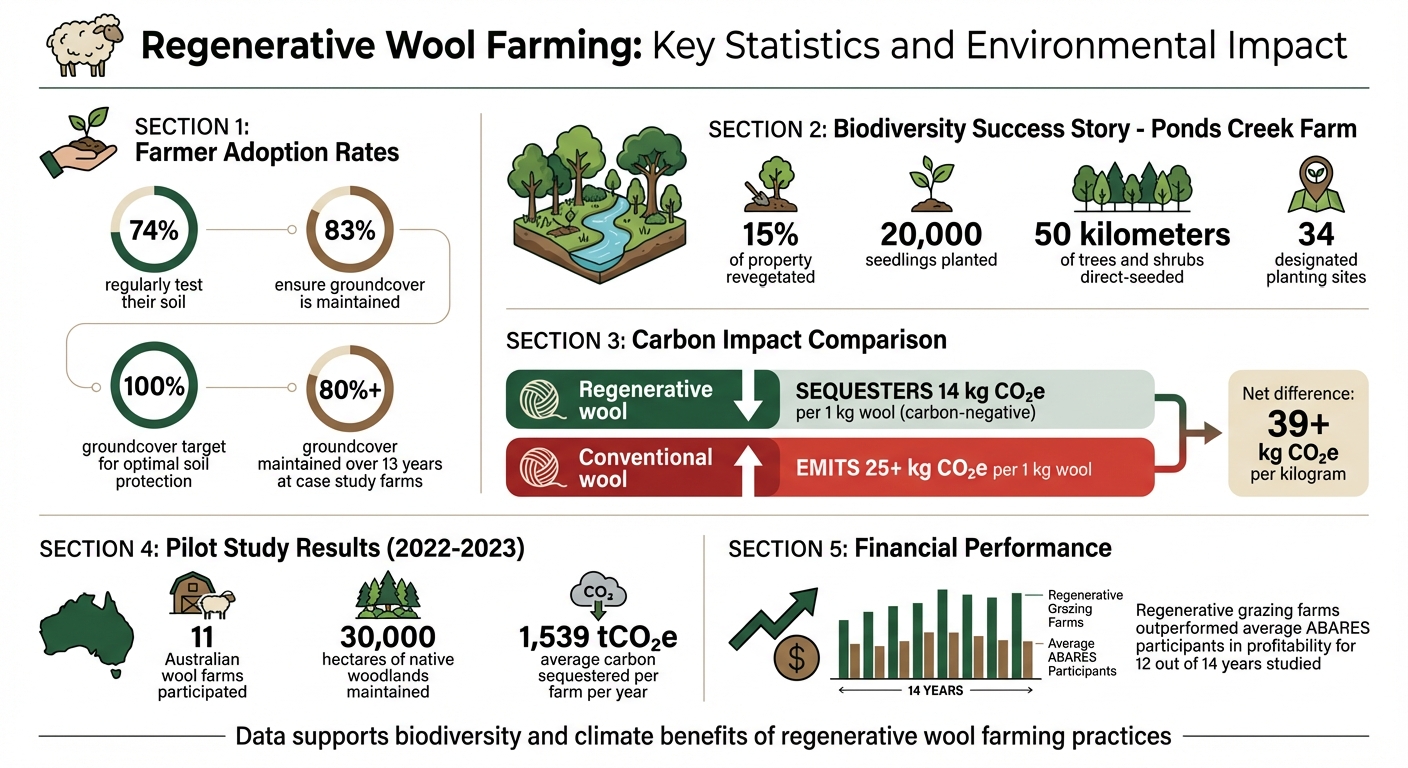
Regenerative Wool Farming: Key Statistics and Environmental Impact
Core Principles of Regenerative Wool Farming
Soil Health and Biodiversity
The foundation of regenerative wool farming lies in healthy soil. When soil is rich in microbial life and its structure remains intact, it supports robust plant growth, retains water effectively, and creates a thriving ecosystem. Stable soil aggregates allow water to seep deep into the ground rather than running off, which helps rehydrate the land and encourages a variety of plant species to flourish.
A significant 74% of woolgrowers regularly test their soil, while 83% ensure groundcover is maintained. This focus on soil health prevents erosion and supports microbial activity. Instead of relying on synthetic fertilizers, farmers use organic composts and bio-amendments to activate natural soil processes. Sheep also play a vital role by naturally fertilizing the land and encouraging pasture regrowth.
Planned Grazing Management
Effective grazing strategies are another cornerstone of regenerative wool farming, ensuring harmony between livestock and the land. By shifting from continuous grazing to rotational grazing, farmers allow plants time to recover and thrive. Sheep are moved through smaller paddocks for short periods, giving pastures the rest they need to regenerate.
Take, for example, Woodville East, where high-density, short-duration grazing has brought native perennials back to life. Similarly, Willow Park employs high-intensity cell grazing, which keeps groundcover intact while maintaining the health of both the livestock and the land.
Carbon Sequestration and Water Cycle Restoration
Regenerative practices go beyond soil and grazing - they actively capture carbon from the air and store it in the soil. This not only combats climate change but also strengthens the farm's resilience. Short recovery periods for plants encourage deeper root systems, which enhance soil carbon storage. Additionally, using dry matter compost and improving soil structure speeds up the carbon sequestration process.
Water management is another critical piece of the puzzle. Techniques like "leaky weirs" slow water flow, allowing it to soak into the ground rather than running off. Permanent groundcover helps reduce evaporation and prevents soil erosion, improving water retention. These methods work together to make farms more drought-resistant and adaptable to changing climates, all while supporting biodiversity even in tough conditions.
Practical Methods to Improve Biodiversity on Wool Farms
Rotational Grazing for Grassland Health
Rotational grazing offers a fresh approach to managing grasslands. Instead of letting livestock graze continuously - often depleting the most nutritious plants - farmers divide their land into sections and rotate animals between these areas, allowing rest periods for recovery. This method encourages native plant species to thrive, develop deeper root systems, and store more carbon, all while supporting a lively and diverse soil ecosystem.
An added bonus? High-density grazing ensures manure is evenly distributed across the paddocks, acting as a natural fertilizer and aerating the soil. Plus, it disrupts the lifecycle of intestinal parasites in sheep, cutting down on the need for chemical treatments.
The financial upside is hard to ignore. Farmers practicing regenerative grazing techniques outperformed average ABARES Farm Survey participants in profitability for 12 out of the 14 years studied. To get the best results, tailor your grazing schedule to the recovery needs of plants instead of using fixed dates. Strive for 100% groundcover to shield soil from erosion and maintain organic matter. This approach not only rejuvenates grasslands but also lays the groundwork for introducing native plants and creating habitat corridors.
Planting Native Species and Habitat Corridors
Building on rotational grazing, planting native species and creating habitat corridors can take farm biodiversity to the next level. The first step? Protect any existing native vegetation - it’s the most effective strategy for enhancing biodiversity on grazing lands. When adding new plantings, focus on linking fragmented habitats to larger ecosystems like wetlands, meadows, or woodlands. These corridors provide essential pathways for pollinators and wildlife to forage, migrate, and raise their young.
Take inspiration from Gordon and Jan Edmonds at Ponds Creek, who transformed their property by revegetating 15% of it. They planted over 20,000 seedlings and direct-seeded 50 kilometers of trees and shrubs across 34 designated sites.
For the best results, aim for shelterbelts that are at least 65 feet (20 meters) wide and include layered vegetation - trees, shrubs, and groundcover - rather than single-species plantings. Using at least 10 native species ensures a variety of bloom times and nectar availability throughout the year. Additionally, fencing livestock away from waterways and creating vegetated buffers at least 33 feet (10 meters) wide can improve water quality and provide habitats for terrestrial species.
Reducing Synthetic Inputs and Controlling Erosion
Cutting back on synthetic fertilizers and herbicides is another effective way to protect both soil health and nearby aquatic ecosystems. Farmers can enhance soil microbial activity by using foliar sprays and organic bio-amendments, which help reduce dependency on synthetic inputs. Sheep themselves contribute to this effort, naturally fertilizing the land and managing weeds without the need for chemicals.
Small landscape changes can make a big impact. For example, installing "leaky weirs" in waterways can slow down runoff, allowing sediment to settle and rebuild eroded creek beds while also rehydrating the surrounding landscape. Avoiding mechanical tillage is another key strategy - it preserves soil structure, improves water infiltration, and reduces erosion. These practices form the backbone of a healthy farm ecosystem, ensuring the soil and water can sustain the diverse life they support.
| Practice | Primary Benefit | Impact on Farm Health |
|---|---|---|
| Leaky Weirs | Rehydrates the landscape; creates aquatic habitat | Rebuilds eroded creek beds and slows runoff |
| No-Till Cropping | Protects soil biota and fungal networks | Prevents mechanical erosion |
| Foliar Sprays | Enhances soil microbial diversity | Reduces reliance on synthetic fertilizers |
| Shelterbelts | Creates wildlife corridors for birds and insects | Reduces wind erosion and protects livestock |
Measuring and Monitoring Biodiversity on Wool Farms
Baseline Assessments and Indicators
To establish a starting point for biodiversity monitoring, wool farms measure key factors like soil carbon levels, microbial activity, and soil structure. Vegetation health is assessed through metrics such as permanent groundcover, native perennial grasses, and tree cover. For water health, indicators include the ability of ecosystems to purify water, the condition of riparian zones, and the presence of aquatic macroinvertebrates.
Surveys reveal that most woolgrowers have adopted multiple regenerative practices to improve their land. Tools like the Quickchecks NRM Monitoring Tool help monitor various aspects of farm health, including grazing paddocks, soil conditions, woody vegetation, watercourses, bird populations, and production metrics.
These measurements not only support ongoing improvements but also form the foundation for certifications.
Certification and Standards for Regenerative Wool
Certifications play a crucial role in verifying and guiding regenerative farming efforts. The Responsible Wool Standard (RWS) evaluates farms on land management, biodiversity conservation, and animal welfare, ensuring transparency from the farm to the final product. However, starting December 31, 2026, the Materials Matter Standard from Textile Exchange will replace RWS, becoming mandatory by December 31, 2027. This new standard emphasizes measurable outcomes related to nature, climate, and water.
The Woolmark+ Nature Positive Farming Framework provides woolgrowers with 10 practical metrics to track outcomes in soil health, biodiversity, climate, and water. Additionally, Natural Capital Accounting (NCA) offers a comprehensive way to monitor environmental assets - such as soil, water, and vegetation - alongside financial performance. Using 12 criteria for ecosystem services and 31 metrics derived from Kering's Environmental Profit & Loss methodology, NCA provides a detailed picture of farm sustainability.
Between 2022 and 2023, a pilot study involving 11 Australian wool farms, including 'Glenwood' and 'Taylors Run,' demonstrated the potential of NCA. These farms collectively sequestered an average of 1,539 tCO₂e per year while maintaining 30,000 hectares of native woodlands.
Using Data to Guide Farm Decisions
Data collection is essential for making informed improvements on wool farms. For example, Geographic Information Systems (GIS) can analyze long-term groundcover trends over 13 years, providing clear, objective insights into land health. This data enables farmers to adjust grazing intensity to maintain groundcover levels of 80% or higher, which benefits both biodiversity and soil health.
A case study from July 2023 highlights how Tim and Suzanne Wright, owners of the 3,470-hectare property 'Lana' in New South Wales, used data from Natural Capital Accounting to guide their Holistic Planned Grazing strategy. Over a 13-year period, they maintained 80% groundcover, increased biodiversity, and grew their flock size. Tim Wright reflected on their approach:
"Native vegetation is 100 per cent important - 'Lana' is a rangeland. We manage for biodiversity because it gives us better balance – more is good. There are lots of indicators. Our groundcover has improved."
The benefits of this approach are echoed by Australian Wool Innovation (AWI), which emphasizes:
"Natural Capital Accounting provides an opportunity for woolgrowers to clearly document and market the positive environmental impacts of their on-farm management to interested buyers and the wider industry."
sbb-itb-9d397ff
From Regenerative Wool to Finished Products
Traceability and Transparency in Wool Supply Chains
Traceability connects the dots between on-farm biodiversity efforts and the final product in consumers' hands. When wool can be traced back to specific farms, brands can verify claims about soil carbon levels, native species conservation, and water quality improvements.
Some wool producers are building direct relationships with brands, using tools like blockchain technology and ecological monitoring to document data on animal welfare and soil health. This allows consumers to know exactly where their garments come from. Nan Bray of White Gum Wool highlights the importance of these connections:
The most critical thing is for my customers to look at me and know that I'm the person they're developing that trust with, and it has served me well.
This level of transparency not only backs up environmental claims but also showcases the exceptional qualities of the wool used in finished products.
Wool Properties Enhanced by Regenerative Farming
Regenerative farming methods have a direct impact on wool quality. Sheep grazing on biodiverse pastures benefit from a varied diet, which boosts amino acid content in their hair follicles. This results in softer, higher-quality wool. Charles Massy, a New South Wales wool grower and author, explains:
Proponents also say regeneratively farmed sheep have a more varied diet, increasing the amino acids in their hair follicles and resulting in higher quality, softer wool.
Healthy sheep, supported by balanced animal welfare practices, produce superior wool. As Australian woolgrowers point out:
High quality wool is only grown by healthy sheep, who in turn graze on healthy pasture and land.
These improvements make regenerative wool an excellent choice for specialized products like Schvitzin's handcrafted sauna hats. These Brooklyn-made hats demonstrate wool's natural breathability, moisture-wicking abilities, and temperature regulation - qualities enhanced by regenerative grazing. The wool’s resilience and softness ensure superior heat retention and comfort, even in the intense heat of a sauna.
Beyond its exceptional performance, regenerative wool offers environmental benefits. It’s odor- and wrinkle-resistant, reducing the need for frequent washing and saving water and energy over its lifecycle. Remarkably, some regenerative wool production is even carbon-negative, with one kilogram of wool sequestering 14 kg of CO₂e, compared to conventional wool, which can emit over 25 kg of CO₂e per kilogram.
Supporting Biodiversity Through Consumer Choices
By choosing regenerative wool products, consumers help fund biodiversity efforts. Purchases of these premium products often come with a higher price tag, but that added value directly supports initiatives that protect and restore ecosystems.
For example, buying products like Schvitzin's sauna hats, made from carefully sourced wool, allows consumers to contribute to a system that prioritizes land stewardship. Certifications such as RWS, ZQRX, or Woolmark+ can help verify that your purchase aligns with verified environmental and ethical standards.
These certifications ensure brands maintain long-term partnerships with wool farms, creating steady demand and ongoing support for regenerative practices that enhance biodiversity.
Conclusion
The Impact of Regenerative Practices
Regenerative wool farming is redefining how we manage land by focusing on restoring ecosystems through healthier soils, strategic grazing, and habitat renewal. The results are compelling: farms practicing regenerative methods report noticeable improvements, like higher levels of organic carbon in the soil and a significant boost in grass production.
And the advantages don’t stop at the farm. Wool’s natural ability to biodegrade makes it a standout choice for environmentally conscious consumers. As Rob Dulhunty from Nant Lodge puts it:
Biodiversity is one indicator of the health of our resource base, and its intrinsic value is the combined production, resilience and stability that it gives our farm ecosystem.
How Consumers Can Support Biodiversity
Consumers have a crucial role in keeping the regenerative cycle alive. Every purchase can contribute to restoring ecosystems and preserving species. To ensure your wool products align with these values, look for certifications like the Responsible Wool Standard (RWS) or Woolmark+, which confirm adherence to environmental and animal welfare standards.
Take, for example, Schvitzin’s sauna hats. Made in Brooklyn, these hats highlight wool’s natural strengths - breathability, moisture-wicking, and temperature regulation - all of which are enhanced when sheep graze on biodiverse pastures. By choosing durable wool products like these over synthetic options, you’re actively supporting farmers committed to protecting the land and fostering healthy ecosystems.
The message is simple: prioritize quality over quantity, demand transparency over flashy claims, and focus on long-term ecosystem health instead of short-term convenience. By making thoughtful choices, you can help sustain biodiversity and ensure a healthier planet for generations to come.
Clothes that Fight Climate Change
FAQs
How does regenerative wool farming benefit soil health and biodiversity?
Regenerative wool farming focuses on nurturing soil as a living ecosystem. Techniques like rotational grazing and planting cover crops help replenish nutrients in the soil, encouraging the growth of beneficial microbes and fungi. These microorganisms play a key role in boosting plant growth. Additionally, these practices aid in storing carbon, improving water retention, and reducing soil erosion, leading to healthier pastures and ecosystems that can better withstand environmental challenges.
To further enrich soil fertility and biodiversity, farmers often adopt methods like maintaining ground cover, planting deep-rooted perennials, and limiting tillage. Schvitzin sources wool exclusively from farms that embrace these sustainable practices. This ensures their sauna hats are made from wool produced on land that promotes thriving ecosystems and supports long-term environmental balance.
How do sheep contribute to regenerative wool farming?
Sheep are an essential part of regenerative wool farming, contributing to healthier soil and richer biodiversity. Their grazing habits help control vegetation, encourage ground cover, and keep pastures thriving. Plus, their manure serves as a natural fertilizer, boosting the soil with vital nutrients.
By improving soil structure and increasing water retention, these practices also aid in capturing carbon from the atmosphere. This makes sheep a key player in producing wool in a way that's both sustainable and environmentally conscious.
How can I tell if a product is made from regenerative wool?
To spot items crafted from regenerative wool, start by looking for certifications such as the Responsible Wool Standard (RWS) or other trusted regenerative labels. Product tags or QR codes can often provide detailed traceability, linking the wool back to farms that prioritize practices enhancing soil health, biodiversity, and water management. It’s also a good idea to explore the brand’s transparency statements to gauge their dedication to regenerative farming techniques.


