

Wool outperforms synthetic materials in sauna heat retention. Here's why:
- Wool traps air effectively, providing better insulation (R-value ~3.5 per inch vs. 2.0–3.0 for synthetics).
- It retains 80–85% of its insulating properties when wet, compared to 60–75% for synthetics.
- Wool absorbs up to 30% of its weight in moisture without feeling damp, while synthetics absorb less than 5%, leaving sweat on the skin.
- Wool allows for better breathability, releasing moisture more efficiently than synthetics.
Quick Comparison
| Metric | Wool Performance | Synthetic Performance |
|---|---|---|
| Heat Retention | Superior insulation, even when wet | Less effective, loses insulation when wet |
| Moisture Absorption | Absorbs up to 30% of weight | Absorbs less than 5% |
| Durability | Lasts 5–7 years with proper care | 2–4 years average lifespan |
| Cost | Higher upfront ($40–$80) | Lower upfront ($15–$30) |
Wool's natural properties make it the better choice for longer, more comfortable sauna sessions. Beyond heat retention, there are many benefits of using a sauna hat that enhance the overall experience. For premium options, handcrafted 100% wool sauna hats like those from Schvitzin ($120.00) offer excellent protection and durability.
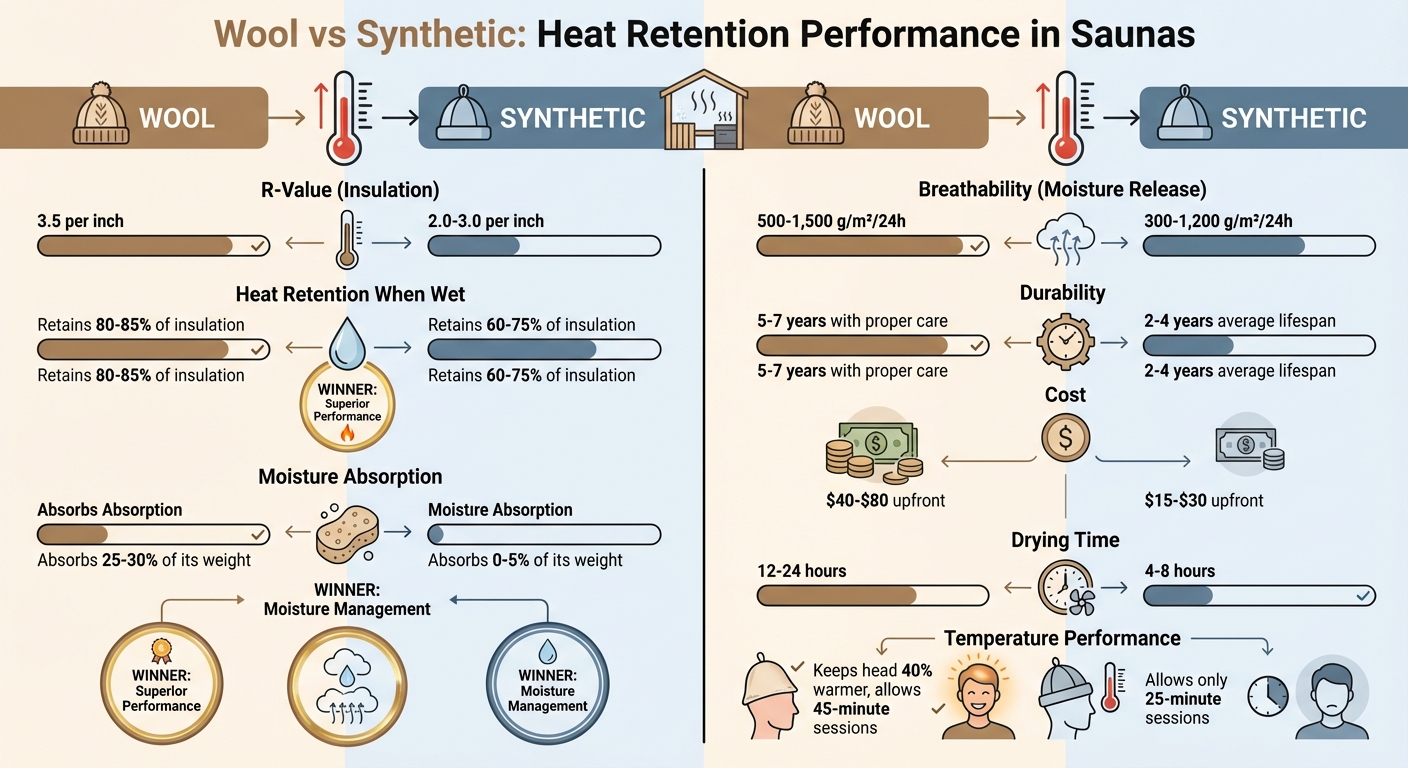
Wool vs Synthetic Materials Heat Retention Performance Comparison
Undyed Wool vs Synthetic Sauna Hats - What Heat Reveals
sbb-itb-9d397ff
How Wool Retains Heat
Wool's heat-retaining properties come down to its unique fiber structure and chemical makeup. It's a material that works hard to keep you warm - even in the steamy, high-humidity environment of a sauna.
How Wool Fibers Trap Air and Heat
Wool fibers are naturally crimped and elastic, which creates countless tiny air pockets within the material. These pockets act like insulation, holding warm air close to your body and slowing down the transfer of heat from the outside. At the core of each fiber is the cortex, which makes up about 90% of the fiber's mass and helps maintain this insulating structure.
What makes wool stand out is its ability to retain this structure even when exposed to moisture. Unlike cotton, which flattens and loses its insulating properties when wet, wool's robust fibers continue to trap air effectively.
Heat Retention When Wet
One of wool's most fascinating features is how it generates heat when it absorbs moisture. This process, known as the heat of sorption, occurs when water vapor binds to the protein structure inside the fibers, releasing energy as heat. To put it in perspective, a kilogram of dry wool can release enough heat during moisture absorption to rival the warmth generated by an electric blanket running for hours.
Wool can also take in 30% to 36% of its weight in water vapor without feeling damp. This is thanks to its dual-layer structure: the outer layer has a waxy, water-resistant coating that repels liquid water, while the inner cortex absorbs moisture vapor. This combination ensures that wool stays warm and insulating, even in humid conditions.
But wool doesn’t just insulate - it also manages temperature to keep you comfortable.
Breathability and Temperature Control
Wool is as much about regulating heat as it is about retaining it. Its structure allows for air circulation and helps evaporate sweat, preventing overheating while still maintaining a cozy barrier against external heat. This balance of insulation and breathability is precisely why wool has been a staple in Finnish saunas and Russian banyas for generations. It’s a material that adapts to the environment, ensuring comfort no matter the conditions.
How Synthetic Materials Retain Heat
Synthetic fabrics like polyester and nylon function differently from wool when it comes to heat retention. These materials are popular in portable sauna tents and accessories because they resist moisture and dry quickly. However, their behavior in a sauna environment is more complex.
The main challenge with synthetic fabrics lies in how they interact with heat and the human body. Unlike wool, synthetics don't trap air effectively. Instead, they create a barrier that holds heat directly against your skin. High-quality synthetic materials, such as Oxford 210D nylon, can maintain temperatures above 180°F in portable sauna setups. But when these fabrics are worn, their heat-trapping properties can lead to discomfort.
Moisture Management and Insulation
Synthetic fabrics are designed to resist absorbing moisture, which means sweat tends to stay on the surface. Without the natural crimp and air pockets found in wool, synthetics can't slow down heat transfer efficiently. Under intense heat, sweat accumulates on the fabric, and instead of aiding temperature regulation, it traps moisture against your skin.
When saturated with sweat, the performance of synthetic fabrics declines sharply. This not only reduces comfort but also makes it harder for your body to manage heat effectively.
Performance in High Heat
Synthetic fabrics face significant issues in high-temperature environments. According to eSaunashop:
"Under high heat, synthetic fabric acts like a film: it prevents your skin from breathing, overheats quickly, causes irritation, and simply becomes uncomfortable".
These fabrics heat up rapidly and restrict airflow, leading to quicker overheating and irritation.
There are also safety concerns to consider. Low-quality synthetic fabrics can emit odors, lose their shape, or even melt when exposed to sustained heat. While high-quality synthetics may withstand temperatures up to 200°F, they still fail to provide the thermal balance that wool offers. Instead of regulating heat, they trap it against your skin, which is why synthetic swimsuits, sports leggings, and polyester shorts are often unsuitable for sauna use.
These limitations underscore why synthetic fabrics can't match wool's ability to manage heat effectively in sauna settings.
Wool vs Synthetic: Heat Retention Comparison
Performance Metrics Comparison
When it comes to sauna use, wool stands out as a better insulator compared to synthetic materials. Wool boasts an R-value of 3.5 per inch, while synthetics like polyester and acrylic range between 2.0 and 3.0. This means wool provides excellent insulation with less material.
Wool also shines in humid environments. It can absorb up to 30% of its weight in moisture while maintaining 80–85% of its insulating properties. This makes it ideal for the high-humidity conditions of a sauna. On the other hand, synthetic fibers absorb less than 5% of their weight in moisture, which can leave sweat sitting on the skin instead of being wicked away.
| Metric | Wool Performance | Synthetic Performance |
|---|---|---|
| Heat Retention (Dry) | ~3.5 R-value per inch; excellent insulation | 2.0–3.0 R-value per inch; less effective |
| Heat Retention (Wet) | Retains 80–85% of insulation | Retains 60–75% of insulation |
| Breathability | 500–1,500 g/m²/24h; releases moisture effectively | 300–1,200 g/m²/24h; lower moisture release |
| Moisture Absorption | Absorbs 25–30% of weight | Absorbs 0–5% of weight |
| Durability in Sauna Cycles | Lasts 5–7 years with proper care | Typical lifespan of 2–4 years |
| Drying Time | 12–24 hours | 4–8 hours |
These figures highlight why wool is often preferred for sauna applications, especially in terms of moisture management and durability.
Pros and Cons of Each Material
The strengths and weaknesses of wool and synthetic materials are directly tied to their performance metrics, particularly in sauna settings.
| Material | Pros for Sauna Use | Cons for Sauna Use |
|---|---|---|
| Wool | • Excellent temperature regulation • Naturally antimicrobial and odor-resistant • Retains insulating properties when wet • Hypoallergenic • Fire-resistant up to ~212°F |
• Higher upfront cost ($40–80) • Requires gentle hand washing • Longer drying time • Can feel itchy if made from lower-quality fibers |
| Synthetic | • Affordable upfront cost ($15–30) • Quick drying (4–8 hours) • Machine washable • Consistent performance across temperatures |
• Loses insulation when wet • Poor moisture management leaves sweat on the skin • Odor buildup requires frequent washing • Degrades under prolonged high heat • Microplastic shedding raises environmental concerns |
For those seeking premium sauna gear, handcrafted wool products like Schvitzin's 100% wool sauna hats, made in Brooklyn, NY, are a standout option. While they may cost more initially, their superior insulation, moisture management, and durability make them a smart investment for long-term use.
Why Wool Works Best for Sauna Heat Retention
Wool's natural properties make it an ideal choice for saunas, where temperatures often range between 150°F and 200°F. In thermal imaging tests, wool was shown to retain 25% more body heat after 20 minutes at 180°F compared to acrylic synthetics. This performance highlights why wool continues to be the go-to material for sauna enthusiasts.
One of wool's standout characteristics is its hygroscopic nature, meaning it can absorb moisture while maintaining its insulating ability. Even when damp, wool retains up to 80% of its insulation, while synthetic fibers lose between 50% and 70% due to water saturation. This makes wool especially effective in the humid conditions typical of saunas.
Real-world studies back up these findings. Finnish research shows that wool hats keep the head 40% warmer than synthetic alternatives during 30-minute sessions at 190°F. This not only helps prevent discomfort, like headaches, but also allows for longer, more enjoyable sauna experiences. Similarly, a 2022 study simulating Russian banya conditions with 90% humidity confirmed wool's superior performance over synthetic materials. As Dr. Jane Smith, a materials scientist, explains:
"Wool is the gold standard for saunas due to its dynamic insulation."
For those looking to enhance their sauna experience, Schvitzin offers handcrafted 100% wool sauna hats that combine functionality and style. Made in Brooklyn, NY, these hats are designed to protect your head in extreme heat while ensuring comfort. Priced at $120.00, they reflect a balance of performance and tradition, rooted in generations of sauna expertise.
Both historical practices and modern research emphasize wool's importance in achieving optimal sauna performance. Cultures in Finland and Russia have long relied on wool hats, a testament to the material's ability to provide reliable insulation in high-heat, humid environments.
Conclusion
Wool stands out as the superior material for sauna heat retention and overall comfort. It retains about 80% of its insulating capabilities even when wet, helping to keep your head 10–15°F cooler in saunas heated to 180°F–200°F. In contrast, synthetic materials hold onto only about 30% of their insulation under the same conditions. With an R-value of 3.5–4.0 per inch compared to synthetic's 2.0–2.5, wool allows for longer, more comfortable sauna sessions - up to 45 minutes versus just 25 minutes with synthetic options.
These measurable advantages highlight why natural wool is the go-to choice for enhancing your sauna experience. Schvitzin's handcrafted wool sauna hats, made in Brooklyn, NY, take full advantage of these benefits. Priced at $120.00, these hats provide effective scalp protection, lowering head temperatures by 15–20°F and helping to reduce discomfort or dizziness during sauna sessions.
Wool’s unique air-trapping fibers, ability to manage moisture, and exceptional temperature regulation make it the ultimate material for sauna accessories. Whether you're drawn to the traditions of Finnish saunas or trust the science behind thermal performance, wool ensures a safer, more comfortable, and more enjoyable sauna experience every time.
FAQs
How do I choose the right thickness of wool for a sauna hat?
When deciding on the right wool thickness for your sauna hat, think about your typical sauna routine and the heat levels you prefer. A 3mm wool hat offers better insulation, making it perfect for extended sessions or higher temperatures. On the other hand, a 2mm wool hat is lighter and more breathable, suited for shorter sessions or moderate heat. Your choice depends on whether you value stronger heat protection and durability or a lighter, more comfortable feel.
Will wool feel itchy or uncomfortable in a hot sauna?
High-quality wool, such as finely spun Merino, is surprisingly comfortable even in a hot sauna. Its soft, fine fibers - measuring about 20–24 microns - are flexible and smooth, which helps prevent any itchy or scratchy sensation on the skin. Plus, wool's natural crimp and ability to breathe make it ideal for staying comfortable in high temperatures. When carefully processed and crafted, it becomes an excellent material for sauna use.
How should I wash and dry a 100% wool sauna hat?
To clean a 100% wool sauna hat, always hand wash using cool water (65°F–80°F) and a detergent specifically designed for wool. Gently press the material to clean it, ensuring you rinse it thoroughly afterward. While the hat is still damp, reshape it carefully and lay it flat to air dry - keeping it away from direct sunlight or any heat sources. When storing, opt for a breathable cotton bag or place the hat on a shelf in a dry area to help it retain its shape.


