

Creating smooth gradient effects in wool projects, like sauna hats, requires strategic planning and blending techniques. By mixing wool fibers in calculated ratios, you can achieve seamless color transitions while maintaining the functional benefits of wool, such as temperature regulation and durability. Here's a quick breakdown:
- Tools: Hand carders, drum carders, blending boards, wool combs, hackles, and a digital scale (for precise measurements).
- Materials: Consistent fiber length is key. Merino wool is a popular choice due to its dye absorption and smooth blending properties.
- Blending Process: Gradients are created by combining fibers in specific ratios (e.g., 2 parts of one color to 1 part of another) and layering them thoughtfully to ensure smooth transitions.
- Felting: Proper agitation and shrinkage (35%-50%) during wet felting lock fibers together and enhance the gradient effect.
Start with simple two-color gradients and gradually experiment with more complex designs. This method not only improves the look of your project but keeps it functional for sauna use, provided you care for your wool sauna hat properly.
Materials and Tools for Wool Blending
Tools You'll Need
The right tools make all the difference when creating smooth color transitions for premium sauna hats. Wool hackles are particularly effective for crafting long, seamless gradients. Available in single or double row configurations, hackles work by lashing and pulling fibers to mix colors, producing parallel fibers ideal for ombré designs. For smaller projects or portability, hand-held wool combs are a great option. By layering different colors of wool top on the combs and pulling them off together, you can achieve blended or striped effects.
If precision is your goal, blending boards allow for detailed control over color placement, especially useful when preparing fiber for felting. A digital scale capable of measuring down to 1 gram is invaluable for maintaining exact color ratios. To keep fiber diameter consistent and avoid tangling, pull only half a staple length off the comb. Also, keep in mind that comb blending often results in short fiber leftovers, which can be repurposed for other projects.
Once your tools are ready, the next step is selecting the right wool to create those perfect gradients.
Selecting Wool for Gradients
Choosing the right wool is essential for smooth, continuous gradients. Consistency in fiber length is key - uniform fibers ensure even color distribution when pulled from a hackle or comb. Depending on your needs and what’s available, you can work with roving, commercial tops, or batts.
For a reliable starting point, merino wool is a popular choice. It takes dyes exceptionally well and produces smooth blends. If you’re working with variegated roving (which already contains multiple colors), you can break it into separate color chunks and re-blend them in your preferred sequence. Keep in mind, though, that variegated fibers feature short, repeating color runs, while true gradients have colors that transition in a long, uninterrupted sequence.
To create intermediate shades between your main colors, take portions of each "mother" color and card them together into transitional nests. Once blended, roll the fiber into sausage-shaped sections and gently draft them into slivers. This step ensures the fibers remain aligned and ready for the felting stage.
sbb-itb-9d397ff
Blending a wool gradient using ‘linear blending’
Planning Your Gradient Design
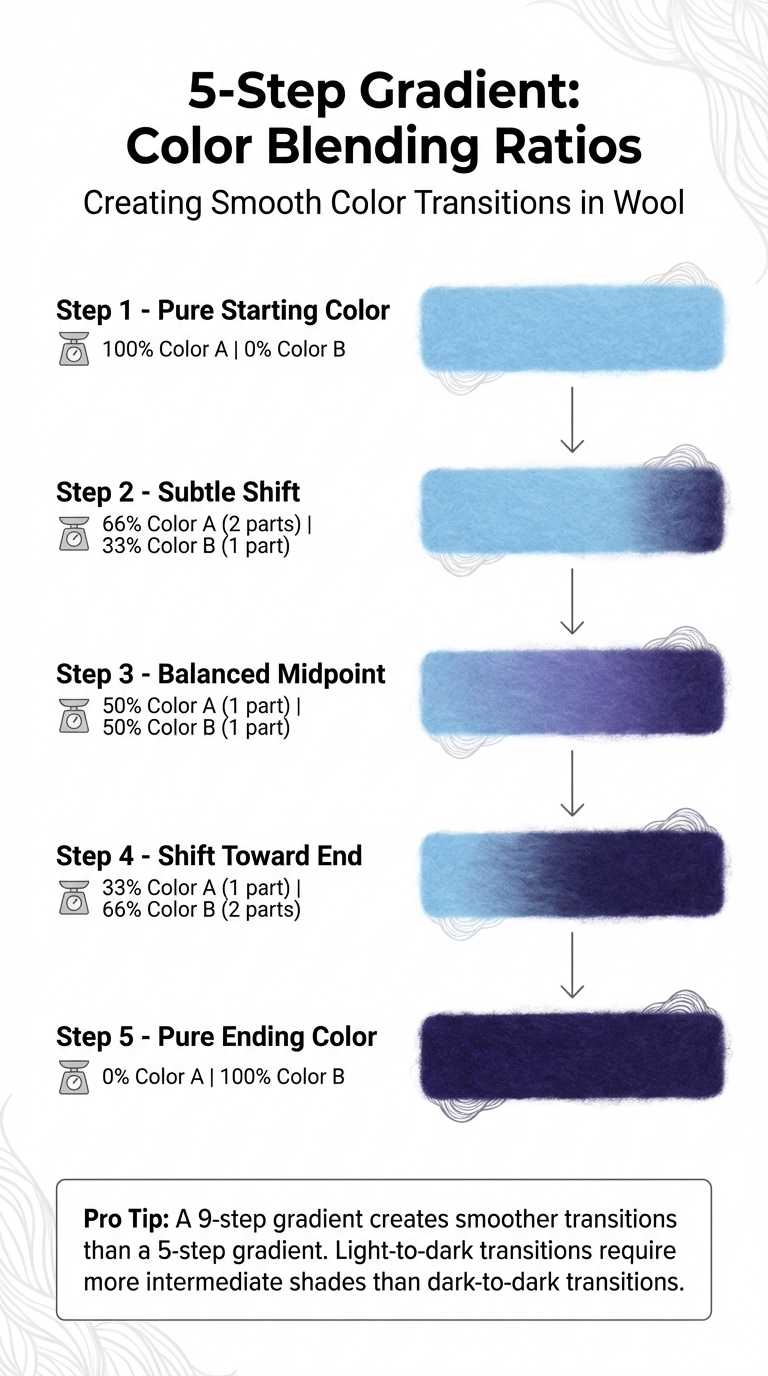
5-Step Wool Gradient Color Blending Ratios for Felting Projects
When creating a gradient, careful planning is key to achieving a seamless and visually appealing transition. The smoothness of your gradient depends on the number of steps you include - a nine-step gradient will look much smoother than a five-step one. If you're transitioning from a light to a dark color, you'll need more intermediate shades compared to transitioning between two dark colors for the same level of smoothness.
Calculating Color Ratios
Start with a simple three-step gradient between two colors: 100% Color A, a 50/50 blend of both colors, and 100% Color B. For a smoother effect, expand to a five-step gradient by adding three intermediate blends between the two main colors:
| Gradient Step | Color A | Color B | Visual Effect |
|---|---|---|---|
| Step 1 | 100% | 0% | Pure starting color |
| Step 2 | 66% (2 parts) | 33% (1 part) | Subtle shift from A |
| Step 3 | 50% (1 part) | 50% (1 part) | Balanced midpoint |
| Step 4 | 33% (1 part) | 66% (2 parts) | Subtle shift toward B |
| Step 5 | 0% | 100% | Pure ending color |
If the transitions feel choppy, tweak the blends slightly by reworking small portions of adjacent shades to create smoother intermediates. Document your blending "recipes" with fiber samples so you can easily recreate successful gradients later.
Once your ratios are finalized, it's time to measure and divide your wool accurately.
Measuring and Dividing Wool
Use your calculated ratios to measure each fiber segment precisely. A digital scale is essential for this step to ensure accurate division. To determine the fiber needed for each step, divide the total project weight by the number of gradient steps. For example, if your project requires 18 oz of wool and has nine gradient steps, each step will need 2 oz of fiber.
Split your primary colors into thirds: keep one-third as the pure tone and blend the other two-thirds with adjacent colors. After weighing and blending each section, roll the fibers into small "nests" or sausage shapes, arranging them in the correct gradient order. This organization helps streamline the felting process and maximize the benefits of using a sauna hat. If your design needs symmetry, like matching sides on a sauna hat, divide each color pile into two equal portions before blending.
Blending Techniques for Gradients
Blending with Hand Combs
Hand combing is a quick and effective way to blend two colors. Start by securing the wool top onto the comb, then pull it through 4–5 times until the comb is about half-loaded. Once you're done, remove the fiber, and you'll have blended "nests" ready for the next stage. This method is ideal for creating a heathered, integrated look in a short amount of time.
For smoother and more controlled transitions, batting layering is another option. Begin by unrolling your wool batting to its full thickness, then split it manually into two thinner layers - much like peeling apart thin sheets. Pull back the top layer of your first color by about 2 inches, then place the second color over the exposed section.
"In your transition areas, the two colours overlapping migrate through one another, creating colour shadowing. This migration is what will create the seamless colour transitioning." - Fiona Duthie, Felting Instructor
Maintaining consistent density is crucial here. When overlapping two thin layers, ensure their combined thickness matches the thickness of the single-color sections. For a more gradual color shift, add fine wisps of wool at the edges of your transition zones. This enhances the gradient effect without adding bulk. Once this step is complete, you can move on to preparing the wool strips for felting.
Preparing Wool Strips for Felting
After blending your colors, the next step is to prepare the fiber strips for felting. Gently attenuate the rolls into long, thin strips. Arrange these gradient strips in order before starting the felting process to easily compare and adjust them visually.
If you notice a sharp color jump between strips, take small pieces from adjacent strips and re-card them to create an intermediate shade. This extra step fine-tunes the gradient, ensuring a smoother transition during felting. During the wet felting process, toss the felt to encourage proper fiber integration. If you don’t see color shadowing or migration, it means your wool needs more agitation. Without enough agitation, the fibers won’t interlock properly, leading to incomplete felting. As the fibers overlap and move through one another during felting and fulling, they create a seamless and polished gradient effect. Paying attention to these details ensures your gradient not only looks great but also holds up well during use.
Creating Gradient Sauna Hats
Arranging Wool for Ombré Effects
To achieve a smooth ombré transition for your sauna hat, arrange your blended wool strips thoughtfully, layering them in thin, overlapping sections rather than placing thick chunks side by side. This layering approach ensures a seamless gradient from the crown to the brim.
Start by dividing your wool batting into two thin layers. Pull up the top layer of your first color by about 2 to 4 inches (5 to 10 cm). Then, take a thin section of your second color and lay it over the exposed area. This overlap creates what fiber artist Fiona Duthie refers to as "color shadowing", where the fibers naturally migrate and blend during felting, creating a smooth transition.
If you're using a resist to shape the hat, avoid cutting the wool edges. Instead, fluff them out gently and wrap the wool tightly around the resist. Keep in mind that wool shrinks significantly - by 35% to 50% - so you’ll need to start with a layout much larger than your desired final size. To be precise, test a small sample (around 8 in²) to determine your specific shrinkage rate.
Once your layers are arranged, you can move on to the felting process to secure the gradient and create a durable structure.
Felting for Durability and Heat Retention
During wet felting, the gradient arrangement transforms into a durable, heat-retentive sauna hat. The combination of warm, soapy water and steady agitation helps the wool fibers interlock and shrink into a dense, sturdy fabric. In the overlapping zones where colors meet, the fibers naturally integrate, reinforcing the smooth gradient effect.
To ensure proper fiber integration, repeatedly toss and full the felt. This step is crucial - without enough fulling, the fibers may not completely lock together, which could weaken both the gradient and the structural integrity of the hat. Achieving the typical 35% to 50% shrinkage ensures the felt becomes firm and durable, maintaining its shape and providing excellent thermal insulation.
The finished sauna hat is not only visually striking but also highly functional. Its dense wool construction effectively regulates temperature and protects your head from extreme heat. For an added cooling effect, try soaking the hat in cool water before wearing it during your sauna session.
Conclusion
Gradient blending turns sauna hats into eye-catching, functional accessories. The process relies on a few key steps: choosing the right wool tops or rovings, arranging smooth color transitions, and felting thoroughly to ensure both durability and visual appeal.
The real transformation happens during the blending phase. Hand carding multiple transition shades between your main colors ensures smooth ombré effects without harsh lines, giving your project a polished, professional finish.
Before diving into a full-scale project, making a test swatch is a smart move. An 8-inch square swatch helps you determine your wool’s shrinkage rate and fine-tune your layout size. This small step can save you from sizing errors and wasted materials.
These hats go beyond aesthetics - they’re also practical. They provide vital heat protection and comfort, even in sauna temperatures ranging from 150°F to 195°F. Wool’s natural antibacterial and odor-resistant qualities make it perfect for steamy, high-moisture environments, while the dense felted structure shields your head from intense heat.
Start with simple two-color gradients and gradually work your way to more intricate blends. Every part of the process, from selecting materials to the final felting, contributes to creating a hat that’s as functional as it is beautiful.
FAQs
What type of wool is best for creating gradient effects in sauna hats?
To achieve smooth and vibrant gradient effects in sauna hats, start by selecting high-quality wool with the right characteristics. Opt for 100% natural wool, such as Merino, known for its softness, durability, and ability to retain color. These features are key to ensuring your gradient transitions look seamless and stand the test of time.
Merino wool, with its crimped or textured fiber structure, is particularly effective at holding dyes and allowing colors to blend naturally. When working with wet felting or fiber blending techniques, choose soft wool that’s easy to handle without felting too early. This makes it easier to create even, visually appealing gradients with less effort. By focusing on premium, well-dyed wool, you’ll craft sauna hats that are not only functional but also visually striking.
What tools do I need to blend wool fibers for gradient effects?
To mix wool fibers and craft stunning gradient effects, two key tools come into play: hand cards and wool combs. Hand cards are perfect for blending different colors or types of wool, helping you create smooth transitions and rich, layered textures. On the other hand, wool combs - especially handheld ones - are excellent for arranging fibers in specific patterns, making them a go-to choice for gradients or striped designs.
When it comes to finishing, tools like steamers or kettles can be invaluable. These help shape and set the fibers after blending, which is particularly useful for projects like sauna hats, where maintaining the wool's structure is crucial. With these tools, creating professional-looking gradient designs becomes a straightforward and rewarding process.
How do I create smooth color transitions when blending wool?
To achieve smooth color transitions in your wool projects, focus on blending fibers gently and evenly. Begin by splitting your wool into thin layers, then overlap small portions of the new color onto the existing one. This layering approach creates a soft, seamless gradient effect.
You can also use hand carders to mix wool fibers effectively. By blending small amounts of two colors together, you’ll create a natural transition without any sharp lines. Work in small, overlapping sections to ensure the colors merge smoothly, giving your project a polished and cohesive appearance.


